Wednesday, June 13, 2018

Roller Coaster


By: Shazeda Khatun and Amani Nasheed


Abstract:
In this research paper, we are focusing on the study aspects of a roller coaster.
In the lab conducted, you will find out what happens to the speed of a marble as
it rolls up and down the hills and valleys of a roller coaster. You will discover the
relationship between speed and height and how energy is conserved. The
physics of roller coasters involves work which is performed whenever a force
acts upon an object. Potential Energy which is stored energy that is giving an
object the potential to do work. Kinetic Energy is the energy a body possesses
because of its motion. It is the mass of the body and velocity at which it moves.
Velocity is the rate of change of an object’s position. The velocity is perpendicular
to the direction of the object.  Motion is the process of moving or being moved. We
found that the potential energy is greatest when it is at the top of the roller coaster
and kinetic energy is greatest when at the bottom of the rollercoaster.

Research paper: https://docs.google.com/document/d/1Qay8krxnDQDAkFQ8oh3yHan2rylR0RA8XjtHh4HW8Y0

Friday, May 25, 2018

Harmonic Motion

Abstract

Harmonic Motion Research Paper

Balancing A Lever

ABSTRACT
The purpose of this lab was to figure out the right weights that were needed in order to balance a lever. The materials used for this lab were a yard stick, balance lever, rubber, bands, weights (g), and a calculator. We used a calculator to find torque by first multiplying the force and the distance from the middle to where the rubber band stops. Second, we \multiplied the number we got and Sin(θ) or Sin(90). Lastly, we added the unit for torque. In conclusion, we figured that it was easier to balance the lever when keeping one side of the meter stick constant and adjusting the other side until they were balanced. This experiment could've been enhanced if we had more weights to work with. Then there would've been different combinations for each trial. Also something that could have affected the lab was that whilst the meter stick being on the center it was tipping over to one side. Overall, it went very well and demonstrated a better understanding of torque and how to solve torque scenarios

Video

LINK
Balancing A Lever Research Paper

Physics of Football

Abstract: Summarize research findings

"An abstract summarizes, usually in one paragraph of 300 words or less, the major aspects of the entire paper in a prescribed sequence that includes: 1) the overall purpose of the study and the research problem(s) you investigated; 2) the basic design of the study; 3) major findings or trends found as a result of your analysis; and, 4) a brief summary of your interpretations and conclusions."
http://libguides.usc.edu/writingguide/abstract


Video

Physics of Football or whatever Research Paper

Thursday, April 26, 2018

GOLF GOLF GOLF GOLF GOLF GOLF GOLF GOLF GOLF and the Stellar Trio ® ©™

https://docs.google.com/document/d/1yv09kQwsXOMlXaYk8C7FsnFlyNcc49A3XD1NDwMpT5w/edit?usp=sharing

https://youtu.be/_squmQKmHJo

https://youtu.be/O2RUYysld3s

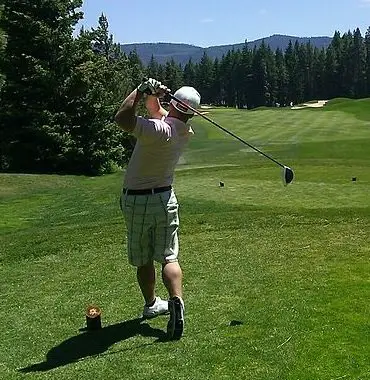
Golf uses many types of physics ideas in the playing of the sport, whether it be it's use of velocity or it's extreme momentum usage, it will always be an odyssey of physics research.

golfing picture


(Abstract) Why we chose to do this lab?
We choose to do this lab because of how we were all intrigued with the idea that golf can be as physics related as most of the labs we do in class. The purpose of this project was to explore the many ways in which golf can be used to further explain the many things we have learned and studied over the course of the year. We were not surprised to find all the physics needed and used to play the sport of golf but we were impressed in how well it would do a player to know these types of physics.

Rollar Coaster

https://docs.google.com/document/d/1Qay8krxnDQDAkFQ8oh3yHan2rylR0RA8XjtHh4HW8Y0/edit

Generating Power

Rebecca Schwartz, Allyson Lyons, Everett Dolan

Research Paper: https://docs.google.com/document/d/12dG5MsQoVud2D1U84wjymHBF1AZnG
CXXwv0pCPXvb18/edit?usp=sharing


Abstract:

The purpose of the study of generating power is to see how much power a body can generate while running up the stairs. It is also to see who can generate the most power, and the reasoning behind why they were able to generate more power than the other people in the group. For this study, it is important to have a staircase, people, a meter stick and a stopwatch. To calculate power, Measure (in cm) the height of one stair. Then, count the steps and multiply the number of steps by the height of the one stair in order to get distance (convert to meters). Have the first person run up one flight of stairs as another person uses the timer to time them. Record the time in the data table. Repeat those steps until all group members have completed 3 time trials. Convert all group members weight (in lb) to Newtons, using the conversion factor 1 lb = 4.448N. Plug in force, displacement, and time to calculate power using P=F(d)/t. Ally generated the most power in our experiment. She generated 452.20 watts of power since her best time was 3.20 seconds. Rebecca generated the least amount of power because her best time was 3.40 seconds, generating 380.96 watts. Ally generate more power than Rebecca because her force was more than Rebecca’s force. Also, her best time was .2 seconds faster than Rebecca’s time. For the first
trial, we did not try as hard to run up the stairs quickly, and our times show that by being a lot longer than our second and third trials. You can not assume constant speed.